Next: Energy Balance: Molting
Previous: Energy Balance: Respiration and
Energy Balance: Movement
Houlihan et al. (1985) measured the energetics of swimming for
juvenile ( 17 g) and medium sized ( 42 g) crabs in
sea water at 22
17 g) and medium sized ( 42 g) crabs in
sea water at 22 C. Base metabolism for these two sizes was
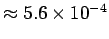 and
and
 (g wet wt)/(g wet
wt hr). Metabolism increased linearly with increases in swimming
speed for both sizes. At 720 m/hr, crabs of both sizes use 5
times as much energy swimming as they do resting.
(g wet wt)/(g wet
wt hr). Metabolism increased linearly with increases in swimming
speed for both sizes. At 720 m/hr, crabs of both sizes use 5
times as much energy swimming as they do resting.
In the model, the cost of transport per g of body weight depends on
the mass,  (g), of the crab and its speed of movement,
  (m/hr)
(Eqn A.28):
(m/hr)
(Eqn A.28):
Gmove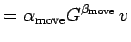 |
(A.48) |
where
 (Houlihan et al. 1985), and
 (g
(g
 .m
.m ). The above equation implies
that larger crabs use proportionately less energy for movement than
smaller crabs (Fig. A10). Under the above parameter
values, the ratio of the crab's maximum rate of mass usage due energy
expenditure for movement relative to the crab's maximum metabolic rate
at
). The above equation implies
that larger crabs use proportionately less energy for movement than
smaller crabs (Fig. A10). Under the above parameter
values, the ratio of the crab's maximum rate of mass usage due energy
expenditure for movement relative to the crab's maximum metabolic rate
at
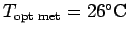 is
is
 and the ratio of
energy usage for movement plus respiration and excretion to
respiration and excretion is
and the ratio of
energy usage for movement plus respiration and excretion to
respiration and excretion is
 , agreeing with the results
of Booth and McMahon (1992).
, agreeing with the results
of Booth and McMahon (1992).
Next: Energy Balance: Molting
Previous: Energy Balance: Respiration and