 |
The costs of respiration (g/hr) depend on a crab's size and the temperature of its environment while excretion costs are modeled as a fixed fraction of respiration costs:
 excretion is set at 0.05 (Guerin and Stickle 1992, Tables 2 and 3),
 min met
 (g
(g
 /hr) (Houlihan et al. 1985; Booth and McMahon 1992), and
 (Houlihan et al. 1985; Laird and Haefner 1976) governs how the rate of
energy expenditure increases with increasing crab mass,
(Houlihan et al. 1985; Laird and Haefner 1976) governs how the rate of
energy expenditure increases with increasing crab mass,  (g).
Metabolic rate has been shown to increase four-fold between
(g).
Metabolic rate has been shown to increase four-fold between  10 and 33
 (McGaw and Reiber 2000). The function
 Temp
Temp is given by
Eqn (A.39). Between 13 and 28
,
different sized crabs utilize their mass at
is given by
Eqn (A.39). Between 13 and 28
,
different sized crabs utilize their mass at
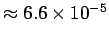 to
to
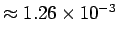 (g wet wt)/(g wet wt
hr) (Crisp 1984; Booth and McMahon 1992; Laird and Haefner 1976; Leffler 1972).
See Fig. A9 for plots of the costs of respiration
and excretion per g of crab mass as a function of mass and
temperature.
(g wet wt)/(g wet wt
hr) (Crisp 1984; Booth and McMahon 1992; Laird and Haefner 1976; Leffler 1972).
See Fig. A9 for plots of the costs of respiration
and excretion per g of crab mass as a function of mass and
temperature.