Next: Altering All Clam Factors
Previous: Altering Clam Densities
Altering Clam Recruitment in Shallow Waters
The rules governing clam recruitment
(Appendix A.4.3) include a factor, given by
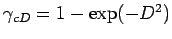 , limiting recruitment in shallower
parts of the estuary. This factor enters into the overall recruitment
level computed using Equation (A.24). To
address the concern that clam recruitment is actually higher in
shallower parts of the estuary, we set
, limiting recruitment in shallower
parts of the estuary. This factor enters into the overall recruitment
level computed using Equation (A.24). To
address the concern that clam recruitment is actually higher in
shallower parts of the estuary, we set
 independent
of depth. With this change, clam biomass increased to 384 (g/m
independent
of depth. With this change, clam biomass increased to 384 (g/m )
(originally 334 g/m Table 1) while
density decreased slightly to 827 (#/m) (originally 864
#/m). Overall crab density for 7-12, 13-17 and 18+ instars
increased slightly (0.1266, 0.0217, and 0.0204 #/m respectively)
relative to the original parameterization (0.1106, 0.0256, and 0.0145
#/m respectively). The increased 7-12 crab density lowered
background biomass to 127 (g/m) from the original 146 (g/m).
There were no indications that crab gut fullness or egg production
were impacted by these changes.
)
(originally 334 g/m Table 1) while
density decreased slightly to 827 (#/m) (originally 864
#/m). Overall crab density for 7-12, 13-17 and 18+ instars
increased slightly (0.1266, 0.0217, and 0.0204 #/m respectively)
relative to the original parameterization (0.1106, 0.0256, and 0.0145
#/m respectively). The increased 7-12 crab density lowered
background biomass to 127 (g/m) from the original 146 (g/m).
There were no indications that crab gut fullness or egg production
were impacted by these changes.
In summary, allowing greater clam recruitment on the shallower parts
of the estuary increased overall crab densities and rates of
recruitment. Thus, the effect of the original parameterization is
that a greater proportion of clams in the estuary are being exposed to
hypoxia than occurs in nature, leading to lower clam biomass, thereby
increasing the possibility of food limitation, and decreasing the
importance of cannibalism.